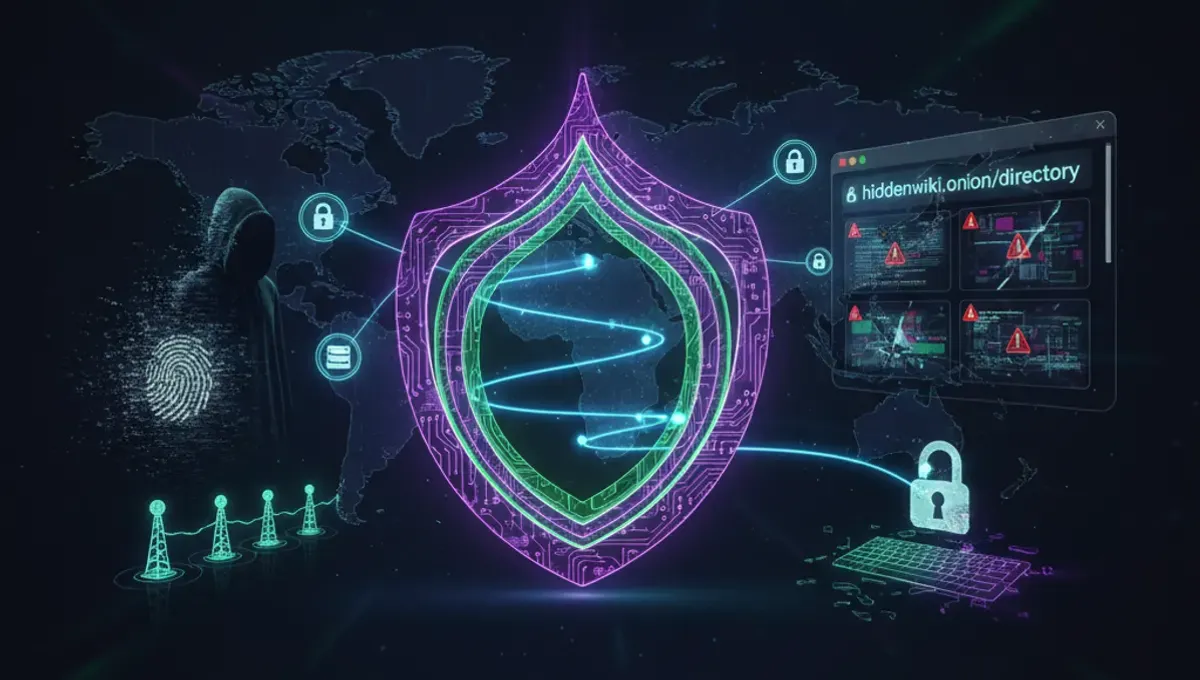
What Are Credit Card Dark Web Sites?
Credit card dark web sites are hidden services accessible only through the Tor browser. They function as marketplaces where threat actors list stolen payment card information, including full card numbers, expiration dates, CVV codes, and cardholder names. Some sites operate as forums where users discuss fraud techniques, share stolen data dumps, or negotiate bulk purchases. These marketplaces typically use escrow systems to mediate transactions and reputation systems to build trust among users. The sites are hosted on .onion addresses, which route traffic through multiple Tor nodes to obscure the server's physical location. Most transactions occur in cryptocurrency, primarily Bitcoin or Monero, to maintain transaction anonymity. The data sold on these sites originates from data breaches, skimming devices, phishing campaigns, or credential stuffing attacks.
How Onion Addresses and Tor Routing Protect These Sites
Onion addresses are special .onion domain names that exist only within the Tor network. When you connect to a credit card dark web site, your traffic is encrypted and routed through at least three random Tor relays before reaching the hidden service. This multi-layer routing makes it extremely difficult for law enforcement or ISPs to identify either the user or the server's location. Each onion address is derived from a public key, meaning the address itself proves the site's identity without relying on certificate authorities. V3 onion addresses, the current standard, use 56-character alphanumeric strings and provide stronger cryptographic security than older v2 addresses. The Tor project's official documentation explains that hidden services generate their address from their private key, making it cryptographically impossible to forge or redirect traffic to a different server. This architecture is why credit card marketplaces prefer the Tor network over clearnet alternatives.
Identifying Phishing Clones and Fraudulent Onion Mirrors
Phishing clones are fake copies of legitimate dark web marketplaces designed to steal login credentials, cryptocurrency deposits, or personal information. Threat actors create these clones by copying the visual design and functionality of popular credit card sites, then promoting them through forums or social media. To verify a genuine onion address: check the exact URL character-by-character against official announcements from the site's administrators, look for PGP-signed messages from verified operators, and cross-reference the address on multiple independent sources. Legitimate marketplace operators publish their onion addresses on their own sites or through verified social media accounts, often with PGP signatures to prove authenticity. A common mistake is assuming that a site with similar branding or a URL that looks almost correct is legitimate. Phishing clones often use addresses that differ by only one or two characters from the real site. Always verify the full 56-character v3 onion address before entering credentials or sending funds. If a site requests unusual verification steps or asks you to download files before accessing it, treat it as a potential clone.
Common Security Mistakes That Compromise Anonymity
Users accessing credit card dark web sites often make operational security errors that expose their identity. Running the Tor browser alongside other applications that leak your real IP address is a frequent mistake; malware, browser plugins, or misconfigured VPN software can bypass Tor entirely. Reusing usernames, email addresses, or writing styles across the clearnet and darknet creates a linkable identity trail that researchers or law enforcement can follow. Uploading files to these sites without stripping metadata can reveal your real location, device information, or previous file history. Maximizing your browser window size while using Tor makes you more identifiable through browser fingerprinting, since fewer users have identical screen resolutions. Visiting credit card sites from a device that also accesses your regular email or social media accounts increases the risk of cross-contamination if malware is present. Disabling JavaScript in the Tor browser is recommended by the Tor project to prevent certain attacks, yet many users leave it enabled. Using the same cryptocurrency wallet address across multiple transactions allows blockchain analysis to link purchases together and potentially identify you.
Comparing Tor, VPN, and I2P for Darknet Access
Tor, VPN, and I2P are three different anonymity tools, each with distinct strengths and weaknesses. Tor routes traffic through multiple volunteer-operated relays and is specifically designed for accessing hidden services; it provides strong anonymity but slower speeds. VPNs encrypt your traffic and route it through a single provider's server, offering faster speeds but requiring trust in the VPN operator and providing weaker anonymity for darknet access since the VPN provider can see your traffic patterns. I2P is a peer-to-peer network optimized for internal communication and file sharing; it offers good anonymity for I2P-native applications but is less suitable for accessing Tor-based credit card sites. For accessing credit card dark web sites specifically, Tor is the standard because these sites are hosted as Tor hidden services and cannot be reached through VPN or I2P alone. A VPN used in combination with Tor can add an extra layer of protection by hiding your Tor usage from your ISP, but it introduces a potential point of failure if the VPN logs traffic or experiences a DNS leak. I2P's architecture is fundamentally different and does not provide direct access to .onion addresses.
Legal and Illegal Uses of Darknet Research
Researching credit card dark web sites for academic, journalistic, or security purposes is legal in most jurisdictions. Security researchers, law enforcement, and journalists use Tor to monitor threat actor activity, track stolen data, and understand fraud trends. However, accessing these sites with the intent to purchase stolen credit card data, use fraudulent payment information, or participate in illegal transactions is a serious federal crime in most countries. The Computer Fraud and Abuse Act in the United States, the Computer Misuse Act in the UK, and similar laws in other nations criminalize unauthorized access to computer systems and fraud. Simply accessing a credit card marketplace site through Tor is not illegal; the illegal activity occurs when you engage in transactions or attempt to use stolen data. Law enforcement agencies worldwide actively investigate darknet marketplaces and have successfully prosecuted operators and users. If you are researching these sites for legitimate purposes, document your methodology, maintain detailed notes, and consider consulting legal counsel about your specific use case. The distinction between research and criminal participation depends on your intent and actions, not merely on accessing the Tor network.
How to Verify Onion Addresses and PGP Signatures
Verifying an onion address requires comparing the full 56-character string against multiple trusted sources and confirming PGP signatures when available. PGP (Pretty Good Privacy) is a cryptographic system that allows site operators to sign messages with their private key, proving authenticity without revealing the key itself. To verify a signature: obtain the operator's public key from their official site or multiple independent sources, download the signed message, and use a PGP tool like GnuPG to verify that the signature matches the message. A valid signature proves the message came from the holder of that private key and has not been altered. Legitimate marketplace operators publish their public keys prominently and sign important announcements, including onion address changes or security warnings. If an operator claims to have moved to a new address but provides no PGP signature, treat it as a potential phishing attempt. Cross-reference onion addresses across multiple independent sources before trusting them; if you find conflicting addresses, investigate which one has valid PGP signatures from the operator. Never assume a site is legitimate based on appearance alone, even if it claims to be the official marketplace.
Frequently asked questions
Are credit card dark web sites illegal to access?
Accessing these sites through Tor is not inherently illegal; many researchers and journalists do so for legitimate purposes. However, purchasing stolen card data, using fraudulent payment information, or participating in transactions is a serious federal crime. Your intent and actions determine legality, not merely accessing the Tor network. If you are researching these sites, document your methodology and consider consulting legal counsel.
How can I tell if an onion address is real or a phishing clone?
Verify the exact 56-character v3 onion address against official announcements from site operators, check for PGP-signed messages proving authenticity, and cross-reference the address across multiple independent sources. Phishing clones often use URLs differing by only one or two characters. Never trust a site based on appearance alone; always verify the full address before entering credentials or sending funds.
What is the difference between Tor and VPN for accessing dark web sites?
Tor routes traffic through multiple volunteer relays and is designed specifically for accessing hidden services like credit card marketplaces. VPNs route through a single provider's server, offering faster speeds but weaker anonymity for darknet access and requiring trust in the provider. For accessing .onion sites, Tor is the standard. A VPN can be used with Tor to hide your Tor usage from your ISP, but it introduces a potential failure point.
What common mistakes compromise anonymity on the dark web?
Reusing usernames across clearnet and darknet, running Tor alongside applications that leak your real IP, uploading files without stripping metadata, maximizing your browser window (which enables fingerprinting), and using the same cryptocurrency wallet across multiple transactions. Disabling JavaScript in the Tor browser is also recommended to prevent certain attacks.
How do onion addresses work and why are they used?
Onion addresses are .onion domain names derived from a hidden service's public key. When you connect, your traffic is encrypted and routed through at least three random Tor relays, making it extremely difficult to identify the user or server location. V3 addresses use 56-character strings and provide strong cryptographic security. This architecture is why credit card marketplaces use Tor instead of clearnet alternatives.